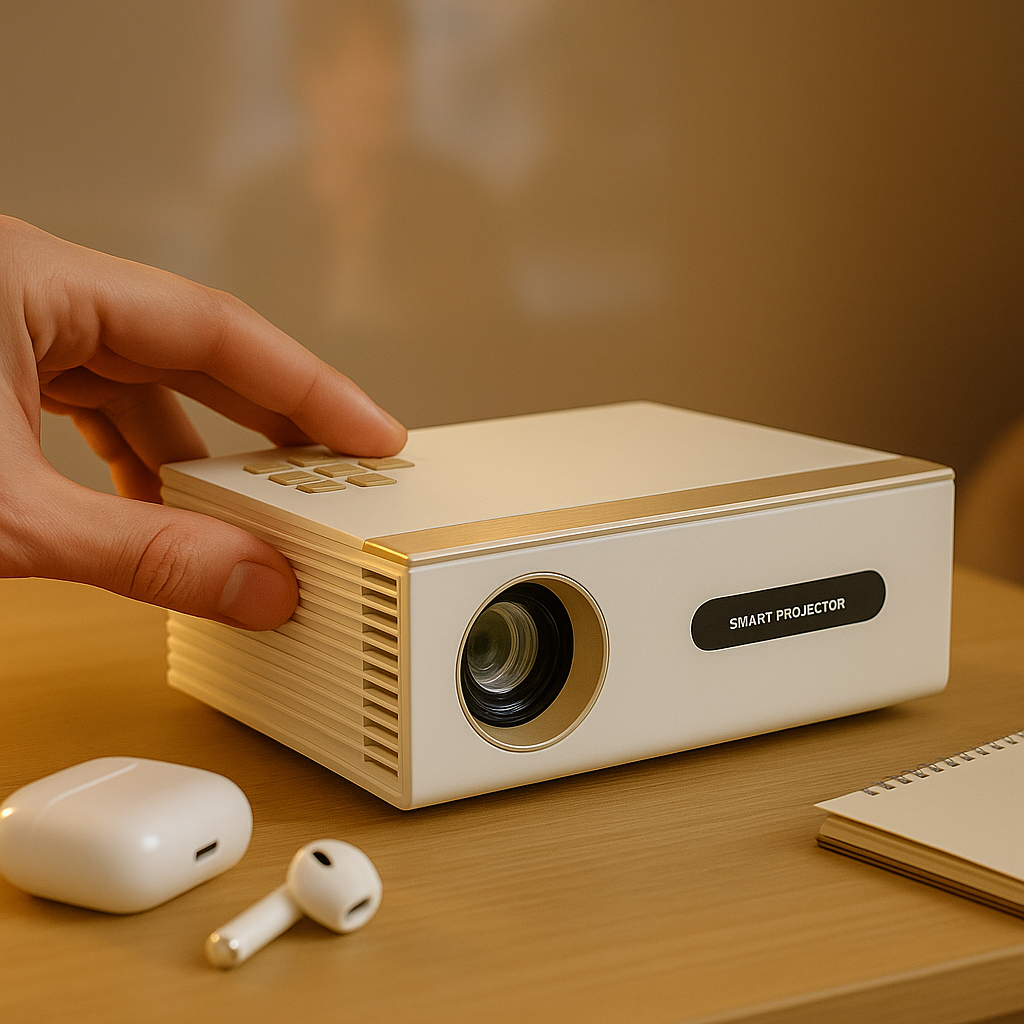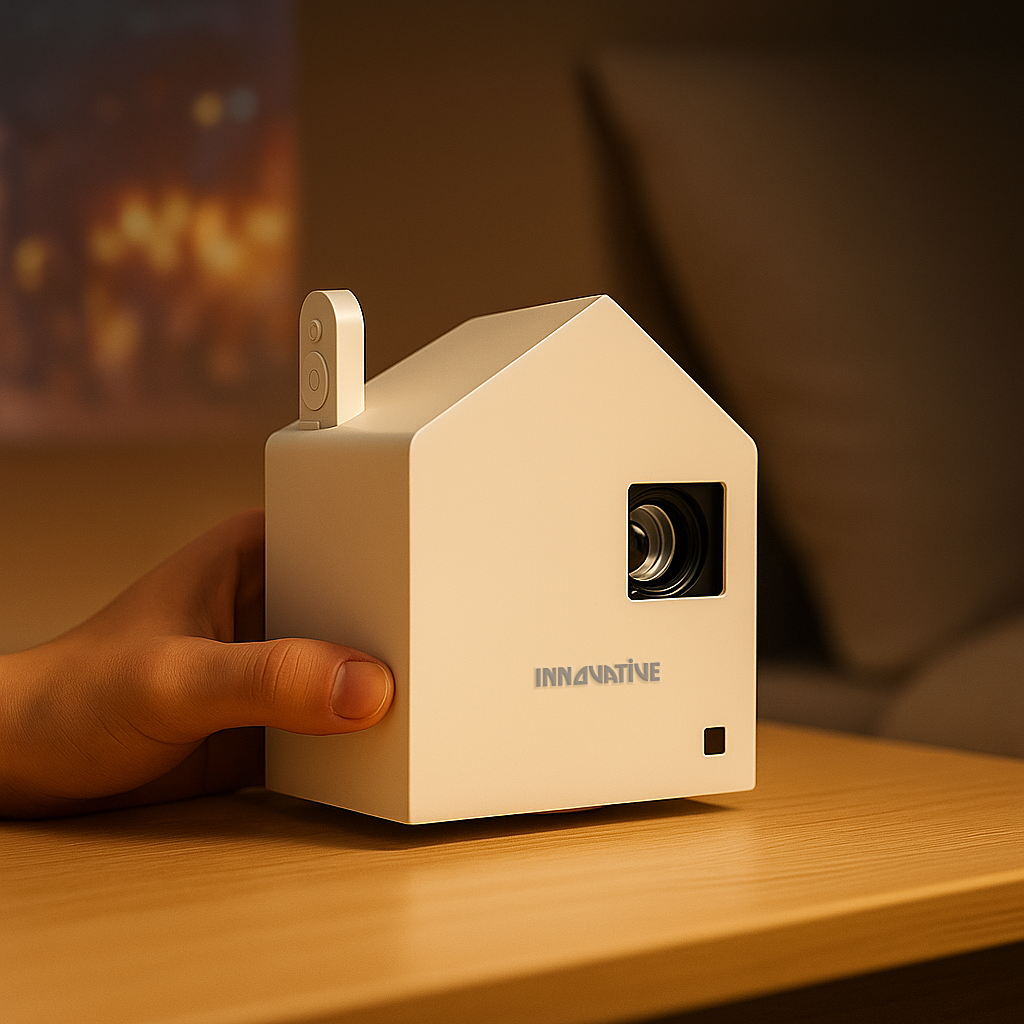

A portable projector should make a movie night, a client presentation, or a weekend away easier - not create a new technical hobby. Yet plenty of shoppers learn how to choose a portable projector only after buying a tiny unit with inflated brightness claims, weak sound, and an image that disappears when a lamp is on.
The better question is not, “What is the highest spec?” It is, “Where will I actually use this?” A projector that feels brilliant in a dark bedroom may be a poor fit for a sunny living room or a meeting where people need to read spreadsheet columns. Start with your real environment, then use the specifications to confirm the fit.
How to choose a portable projector: start with the room
Think through the projector’s most common job. If it will move between a bedroom, living room, backyard, and a friend’s house, prioritize fast setup, an internal battery, built-in streaming, and an image that looks good at moderate sizes. If it will mostly stay in one room, a slightly larger projector with more brightness may deliver a much better picture than an ultra-compact model.
Room light matters more than most marketplace listings admit. In a fully dark bedroom, many quality portable projectors can create a satisfying 70- to 100-inch image. Add table lamps, open blinds, or overhead lighting, and the same projector can look washed out. For daytime viewing, you need meaningfully higher real brightness, sensible screen placement, and light control where possible.
Also decide what “portable” means to you. A projector that weighs a few pounds and moves easily from room to room is portable. A palm-sized unit that fits in a jacket pocket is more portable, but usually makes compromises in brightness, sound, cooling, or battery capacity. There is no universal winner. The right balance depends on whether you are carrying it across town or simply taking it off a shelf.
Match the image size to your expectations
A bigger image is not automatically a better image. As you stretch the projection from 80 inches to 120 inches, the available light spreads over a larger area. The result is a dimmer-looking picture. Portable models are often at their best in the 60- to 100-inch range, particularly in darker rooms.
If your goal is a true living-room cinema experience at 120 inches or more, prioritize brightness before battery size. If your goal is a cozy bedroom screen, travel entertainment, or kids’ movie night, a battery-powered option can be the smarter choice. Buying for the largest number on a listing instead of the image size you will really use is a common and expensive mistake.
Ignore inflated lumen claims and look for real brightness
Brightness is the projector category’s biggest trap. Some low-cost brands advertise enormous “lumen” numbers without explaining the measurement method. Those claims are often not comparable to ANSI lumens or ISO lumens, which are more meaningful ways to discuss actual light output.
Do not assume a projector claiming 15,000 or 20,000 lumens will overpower daylight. If a small, inexpensive projector appears to promise brightness that rivals a much larger premium model, skepticism is justified. Real-world testing matters because color accuracy, contrast, screen size, and ambient light all affect how bright an image feels.
For dark-room entertainment, a quality lower-brightness portable projector can be excellent. For rooms with moderate ambient light, look for a reputable projector with substantially more measured brightness and use a suitable screen. For daytime sports, presentations near windows, or a bright common room, a bright-room projector is usually a better investment than trying to force a mini projector to do a job it cannot do.
Brightness also affects eye comfort. A dim, low-quality image can encourage viewers to sit closer or strain to see shadow detail. For family viewing, a properly sized, well-calibrated projected image in a controlled room is more comfortable than chasing maximum screen size with a weak projector.
Check placement before you buy
Every projector needs a certain distance from the screen to make a certain image size. This is determined by throw ratio. You do not need to become an engineer, but you do need to know whether the projector can create your desired image from the shelf, table, or tripod position you have available.
For example, a standard portable projector may need several feet of distance to make an 80-inch image. In a compact apartment bedroom, that can mean placing it on a nightstand behind the bed or using a ceiling mount. A short-throw or ultra-short-throw projector can produce a large picture from much closer to the wall, but those models are generally less grab-and-go and benefit from a stable, flat screen setup.
Pay attention to image adjustment, too. Auto focus and auto keystone correction are useful when you move frequently, but they are conveniences, not magic. Keystone correction digitally reshapes the picture and can reduce sharpness. The clearest image comes when the projector is centered and level with the screen. Choose a model that is easy to position correctly rather than relying on aggressive correction every time.
Decide whether battery power is essential
Battery power is freedom, but it has limits. A built-in battery is ideal for an outdoor movie, a bedroom without convenient outlets, travel, or a quick presentation in a flexible workspace. Expect many battery-powered projectors to deliver around one full movie at a moderate brightness setting, not an all-day marathon.
Check whether the stated battery life applies to projection, not just music playback or standby mode. Also see whether the projector can run while charging from a wall outlet or compatible power bank. That flexibility matters when movie night runs long.
If you will almost always be near an outlet, do not let the battery feature outweigh image quality. A plug-in portable projector may give you more brightness, stronger audio, and a better cooling system for the same budget. “Portable” should mean easy to use where you live, not necessarily battery-powered at every cost.
Do not treat sound and streaming as afterthoughts
Built-in speakers are convenient, especially for bedrooms, travel, and casual viewing. But compact projector speakers have physical limits. For dialogue-heavy movies, larger rooms, or outdoor use, Bluetooth audio or a wired speaker option can make a bigger difference than a modest resolution upgrade.
For streaming, confirm how you will access the services you use. Some projectors include a licensed smart TV platform; others use an app store with uneven support; some work best with a dedicated streaming stick. A projector that starts quickly, holds a reliable Wi-Fi connection, and lets you open your preferred app without workarounds is genuinely more portable in daily life.
Also consider inputs. HDMI remains useful for game consoles, laptops, and streaming devices. USB playback may help during travel or presentations. Wireless screen sharing is convenient, but it is not always the best choice for video or high-stakes meetings because connection quality can vary.
For work, test text clarity rather than just resolution
A projector can look great with a movie and still be frustrating for business use. Presentations, spreadsheets, classroom materials, and web dashboards depend on legible text across the whole image. Resolution matters, but focus quality, contrast, brightness, and the quality of the projector’s optics matter too.
If you present often, choose a model that has been tested with real documents, not just colorful promotional slides. Make sure it has the connections your team uses and enough brightness for the lighting conditions in your meeting room. In a bright office, a screen positioned away from windows can help, but it cannot fully compensate for insufficient light output.
For teams that need repeatable setup, favor a projector with reliable auto focus, practical mounting options, and a consistent way to connect laptops. The best presentation projector is the one that is ready before the meeting starts.
Choose the screen as part of the system
A white wall can work for a casual trial, but paint texture, wall color, and reflections reduce image quality. A portable screen gives you a predictable, cleaner surface wherever you set up. For bright rooms, an ambient-light-rejecting screen can improve perceived contrast when matched properly to the projector and room.
Screen size should support the projector’s available brightness, and screen location should support the room. Avoid placing the image where direct sunlight hits it. If a permanent setup is planned, a proper ceiling mount or wall tray can remove daily setup friction while keeping cables organized.
INNOVATIVE Projectors recommends judging projector and screen choices as one system because a strong projector on the wrong surface can still produce a disappointing result.
Buy for the experience, not the spec-sheet fantasy
Before purchasing, picture a normal Tuesday night. Where does the projector sit? How long does setup take? Is the room dark enough? Will everyone hear dialogue? Can you watch the whole movie on battery? Those practical answers matter more than exaggerated lumen labels, vague “4K supported” claims, or a tiny projector photo next to a giant screen.
Choose the portable projector that fits your actual room, light level, screen size, and habits. When those pieces match, big-screen viewing feels simple: carry it in, turn it on, and enjoy the space you already have.