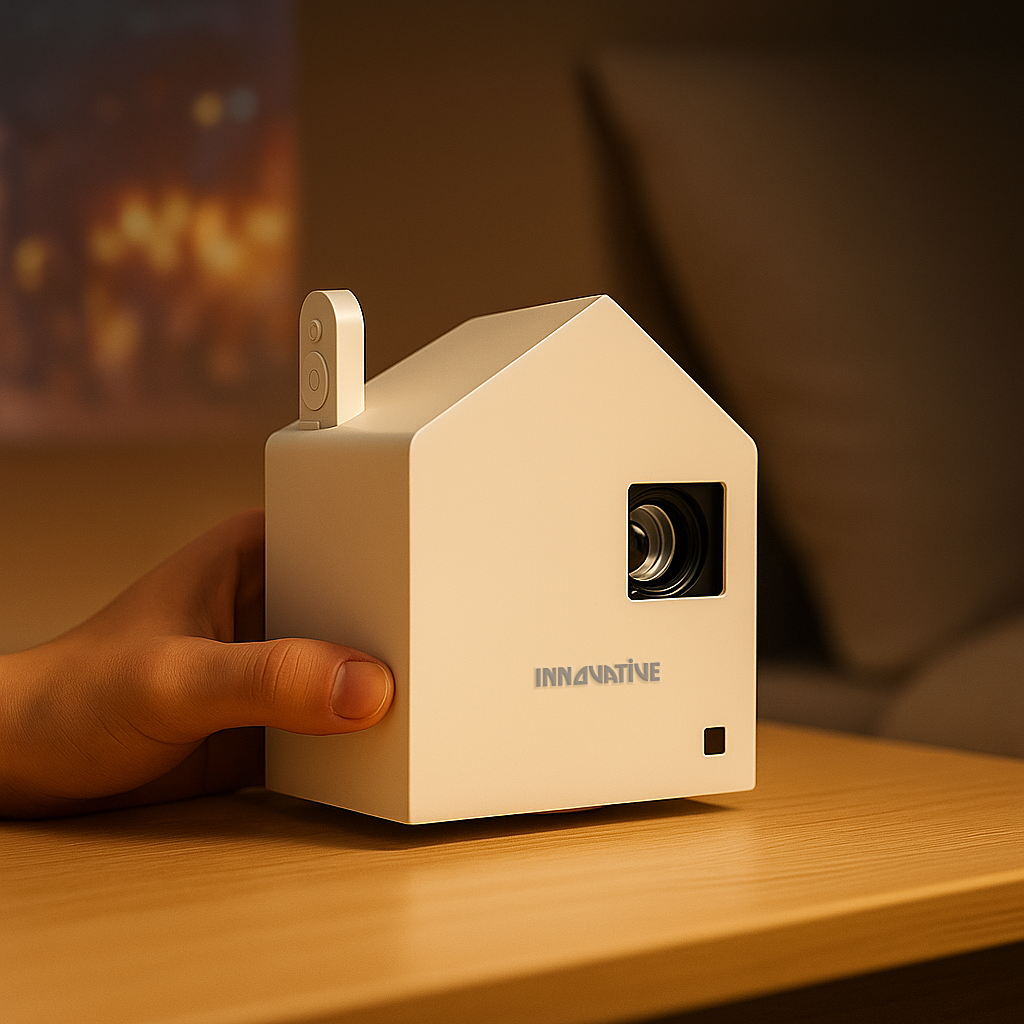

Sunlight is where cheap projector promises go to die. If you are shopping for the best projector for bright room use, the real question is not which model has the biggest number on a product page. It is which projector still looks watchable at 2 p.m., keeps text readable in a meeting, and does not fall apart the moment your blinds are half open.
That difference matters because bright-room projection is one of the most misunderstood categories in consumer electronics. Brands throw around inflated lumen claims, shoppers compare screenshots that were never taken under equal conditions, and people end up blaming projection itself when the real problem was buying based on the wrong metrics.
What makes the best projector for bright room use?
Brightness matters, but brightness alone is not the whole story. A projector can be very bright and still look harsh, washed out, or weak with fine text. Another can produce a more balanced image that actually feels better in a living room or office because the color holds up and the optics stay sharp.
For bright-room use, you are balancing four things at once: real brightness, image contrast, screen size, and room control. Ignore any one of them and the setup suffers. That is why the best projector for bright room viewing is usually not the cheapest option, and it is almost never the no-name mini projector claiming impossible performance for suspiciously low prices.
If your goal is daytime sports, casual TV, or presentations with lights on, you need a projector designed for that environment from the start. If your goal is a cinematic movie experience in a sunlit living room, you also need to be realistic. Projection can absolutely work in bright spaces, but the setup has to fit the room rather than fight it.
The biggest myth: more lumens always means a better picture
This is where buyers get trapped. Marketplace listings often promote huge brightness numbers without clearly explaining how they were measured. Some quote light-source brightness, some use marketing terms with no standard meaning, and some simply exaggerate. That is why real-world testing matters more than spec-sheet chest beating.
A good bright-room projector needs enough usable brightness on screen, not just a flashy claim in the headline. Usable brightness means the image still has shape and color after it is enlarged to your actual screen size. It also means white backgrounds in spreadsheets do not blow out while black text stays crisp.
There is a trade-off here. Push brightness too hard and image quality can become less natural. You may get a punchy picture for sports or slides, but movies can lose depth. On the other hand, prioritize deep contrast without enough light output and the image can look great at night but weak during the day. The right choice depends on what you watch and when you watch it.
Screen size changes everything
A projector that looks excellent at 80 inches may struggle at 120 inches in the same room. That is not a defect. It is physics.
When you stretch the image larger, the available light spreads across more surface area. In a bright room, that drop becomes obvious fast. People often assume the projector failed, when really the image was simply pushed too large for the available light and room conditions.
For daytime viewing, a slightly smaller screen often beats a bigger washed-out one. If you want the best projector for bright room performance, think in terms of the best image at the right size, not the biggest possible picture under any condition. In many living rooms, 80 to 100 inches looks stronger and more usable than trying to force 120 inches with open windows.
Why the screen matters almost as much as the projector
A bright-room projector paired with the wrong screen is money wasted. White walls are convenient, but they reflect ambient light in ways that flatten contrast and reduce perceived punch. In a darker room, you can get away with that. In a bright room, the screen becomes part of the performance equation.
Ambient light rejecting screens can make a meaningful difference because they help direct the projector's light toward viewers while reducing the impact of room light. They are not magic, and they do not replace actual projector brightness, but they can make daytime viewing more practical and more consistent.
This is especially true in living rooms and offices where you cannot black out the space every time you want to watch something. A better screen can often improve the image more than chasing another inflated brightness claim. That is one reason serious buyers should think in systems, not single products. Projector, screen, placement, and mounting all work together.
Living room, office, or classroom? The answer changes
Not every bright room is bright in the same way. A family living room with side windows has different demands than a conference room with ceiling lights and spreadsheets. The best projector for bright room use depends heavily on content.
For daytime TV and sports
Motion, color, and perceived brightness matter most. You want a projector that stays lively with some ambient light and does not require constant tweaking. This is where higher usable brightness and easy streaming convenience make a lot of sense.
For movies in a multi-use room
You need balance. Too much focus on raw brightness can make films look flat, but too little means daytime viewing becomes frustrating. A premium living-room projector often earns its value here because it holds up better across different times of day.
For presentations and text-heavy work
Sharp optics and text clarity are critical. Many projectors look fine with video but fall apart when showing spreadsheets, small fonts, or detailed charts. Business buyers should care less about hype and more about whether the image stays readable from the back of the room with lights on.
Placement can help or hurt bright-room performance
Projector placement is not just about convenience. It affects how practical the system feels day to day.
Ultra short throw and near-wall setups can be excellent in bright rooms because they reduce shadows, simplify installation, and pair well with the right screen. They also fit apartments and smaller living spaces where long-throw placement is awkward. For many buyers, especially in modern homes, a near-wall projector is the difference between a system that gets used daily and one that becomes a weekend-only novelty.
Portable projectors can also work in bright environments, but expectations should be realistic. Portability is great for flexibility, moving room to room, and quick setup. But if bright-room viewing is your main priority, make sure portability is not coming at the expense of the light output and image stability you actually need.
How to avoid the common buying mistakes
The biggest mistake is shopping by a single number. The second is assuming all projector comparisons are fair. Camera exposure, room lighting, image mode, throw distance, and screen type can completely change what you think you are seeing.
Another mistake is underestimating how much room control you already have. You may not need blackout conditions. Sometimes basic steps like closing one set of blinds, choosing a better wall, or reducing the screen size by 10 to 20 inches can transform the result.
The smartest buyers start with use case first. Ask yourself when the projector will be used most often, what content matters most, and whether the room is fixed or flexible. That gives you a real buying framework. It is also how we approach recommendations at INNOVATIVE Projectors, because bright-room success comes from matching tested performance to actual lifestyle use, not forcing every shopper into the same spec race.
What to look for if you want a projector that actually works in daylight
Look for honest brightness positioning, strong real-world image quality, and proven text clarity if work is involved. Consider whether you need built-in streaming, wireless convenience, battery support, or a dedicated mounted setup. Think about whether an ALR screen or a proper mount should be part of the purchase from day one.
Most of all, be skeptical of products that promise everything at once for almost nothing. Very cheap projectors often look acceptable only in dark rooms at small sizes, and even then, focus uniformity, color accuracy, and long-term reliability can be poor. For families, that often means more eye strain, more fiddling, and less actual enjoyment.
A good bright-room projector should make modern life easier. It should turn your living room into a usable big-screen space during the day, not create a new hobby in troubleshooting. It should handle presentations without embarrassing washed-out slides. It should fit the room you have, not the fantasy setup from a misleading ad.
If you are trying to choose well, stop asking which projector has the loudest specs and start asking which one still looks good when the room is lived in. That is usually where the right answer becomes obvious.